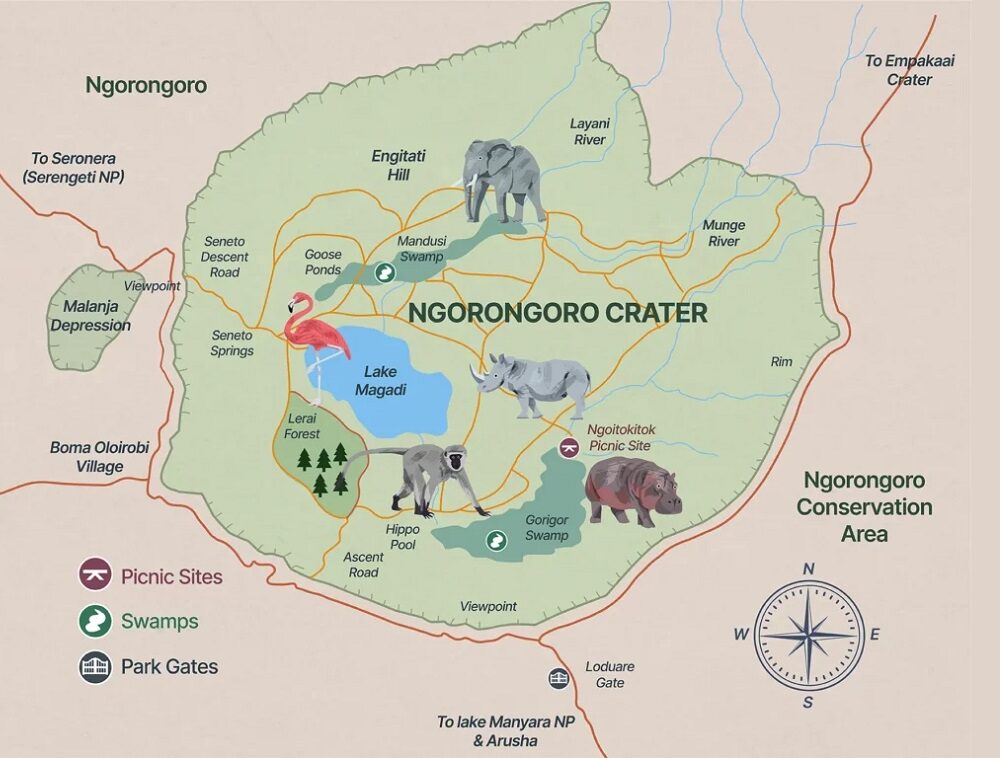
Ngorongoro Crater Safari Guide in 2026 reveals everything you need to plan a perfect visit, from incredible wildlife density to expert-backed safari tips. Discover updated safari costs, the best time to visit, and whether a day trip or overnight stay delivers the ultimate Ngorongoro experience.
As a safari expert who has guided travelers across northern Tanzania for years, I can confidently say that Ngorongoro Crater is one of the most extraordinary wildlife destinations in Africa.
It combines breathtaking scenery, unmatched wildlife density, and deep conservation importance—all in one natural amphitheater.
This guide explains why Ngorongoro Crater deserves a place on your safari itinerary, what wildlife you can expect, how much it costs, and how to plan your visit the right way.
What Makes Ngorongoro Crater Unique? (Keyword-Focused Subtitle)
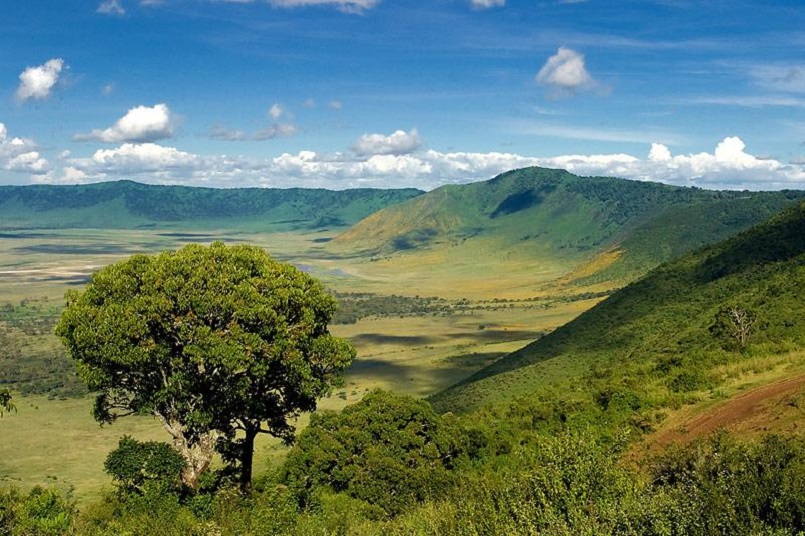
The Ngorongoro Crater is the world’s largest intact volcanic caldera, formed over two million years ago. Unlike most safari parks, wildlife here lives year-round within the crater walls, making sightings exceptionally reliable.
Why Ngorongoro Crater Is So Special
- UNESCO World Heritage Site
- Over 600 meters deep and 260 sq km wide
- Permanent water sources attract animals all year
- Rare chance to see the Big Five in one day
- Coexistence of wildlife and Maasai culture
From a guiding perspective, Ngorongoro offers one of the highest success rates for wildlife viewing in Africa.
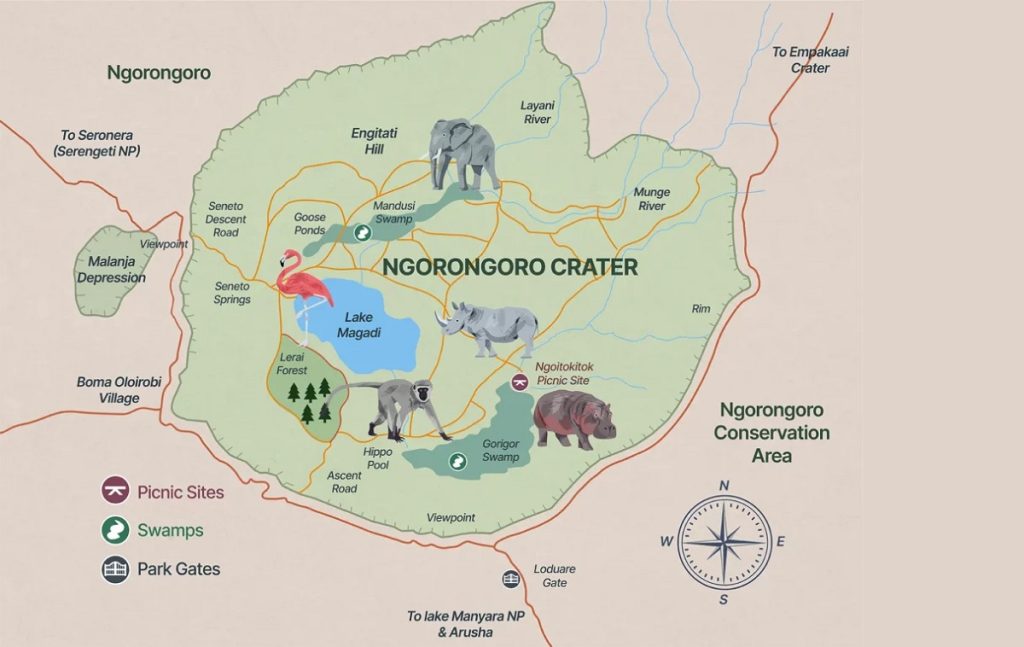
Wildlife Density Facts (Why Sightings Are Guaranteed)
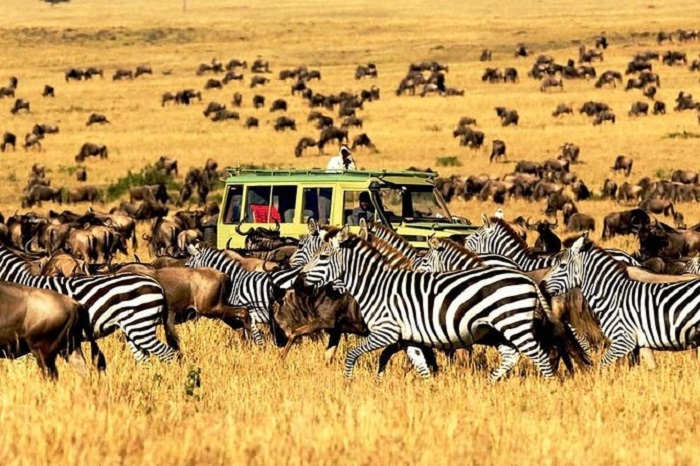
Ngorongoro Crater has one of the highest concentrations of wildlife per square kilometer in Africa.
Wildlife You Can Expect to See
- Lions (large resident prides)
- African elephants (including old bulls)
- Black rhinos (critically endangered)
- Leopards (rare but present)
- Buffalo herds
- Wildebeest & zebras (over 25,000 combined)
- Hippos, hyenas, jackals
- Flamingos and water birds at Lake Magadi
Big Five in Ngorongoro Crater
✔ Lion
✔ Leopard
✔ Elephant
✔ Buffalo
✔ Black Rhino
Seeing all five in a single game drive is very possible, especially with an experienced guide.
Conservation Importance of Ngorongoro Crater
Ngorongoro is not just a safari destination—it is a global conservation success story.
Why Conservation Here Matters
- Protects endangered black rhinos
- Preserves ancient migration corridors
- Supports Maasai pastoralist communities
- Balances tourism and sustainability
The Ngorongoro Conservation Area Authority (NCAA) limits development and controls vehicle numbers to protect this fragile ecosystem.
As a local operator, I strongly support responsible tourism because it directly funds conservation and community livelihoods.
Day Trip vs Overnight Safari in Ngorongoro Crater
Many travelers ask me whether a day trip is enough or if they should stay overnight. Here’s an honest comparison:
Day Trip vs Overnight Safari Comparison
| Feature | Day Trip | Overnight Stay |
|---|---|---|
| Time in crater | 4–6 hours | Full day flexibility |
| Cost | Lower | Higher |
| Wildlife experience | Excellent | More relaxed |
| Sunrise views | ❌ | ✅ |
| Crowds | Moderate | Fewer early/late hours |
| Ideal for | Short itineraries | Premium experience |
My Expert Recommendation
- Day trip: Perfect if you’re combining Serengeti + Ngorongoro
- Overnight stay: Best for photographers, honeymooners, and luxury travelers
Ngorongoro Crater Safari Cost Breakdown
Ngorongoro is a premium destination due to high conservation fees.
Average Ngorongoro Safari Costs (Per Person)
| Safari Type | Estimated Cost |
|---|---|
| Budget Safari | $250–$350/day |
| Mid-Range Safari | $400–$600/day |
| Luxury Safari | $700–$1,200+/day |
What the Cost Includes
- Ngorongoro Conservation Area fees
- Crater descent fee
- Professional guide
- 4×4 safari vehicle
- Meals (depending on itinerary)
Possible Extra Costs
- Luxury lodge upgrades
- Private vehicle
- Tips & personal expenses
Best Time to Visit Ngorongoro Crater
Ngorongoro is a year-round safari destination, but timing affects experience.
Best Months
- June–October: Dry season, best visibility
- January–February: Calving season, fewer crowds
Rainy Season (March–May)
- Lush scenery
- Fewer tourists
- Slightly challenging roads
I personally recommend June to September for first-time visitors.
Why Include Ngorongoro in Your Tanzania Safari?
If you want maximum wildlife in minimal time, Ngorongoro Crater delivers unmatched value.
Ideal For:
- First-time safari travelers
- Families
- Wildlife photographers
- Short safari itineraries
- Big Five seekers
Plan Your Ngorongoro Crater Safari with a Local Expert
I personally help travelers design Ngorongoro safaris that match their budget, travel style, and wildlife goals. Whether you want a day trip or a luxury crater lodge stay, I’ll ensure your safari is ethical, smooth, and unforgettable.
👉 Visit: www.alpstrendysafaris.com
👉 Email: info@alpstrendysafaris.com
FAQs On Ngorongoro Crater Safari Guide In 2026
1. Can I see the Big Five in Ngorongoro Crater?
Yes. Ngorongoro is one of the best places in Africa to see all Big Five species in one day.
2. Is Ngorongoro Crater suitable for children?
Yes, it’s ideal for families due to short game drives and high wildlife density.
3. How long is a typical crater game drive?
Most crater game drives last 4–6 hours, depending on entry time and wildlife activity.
4. Do I need a guide in Ngorongoro Crater?
Yes. All safaris must be guided by licensed professionals.
5. Can Ngorongoro be combined with Serengeti?
Absolutely. This is one of the most popular and rewarding safari combinations in Tanzania.
Final Words
Ngorongoro Crater is not just another safari stop—it is a natural wonder, conservation landmark, and wildlife paradise. From my experience guiding guests here, it consistently delivers unforgettable moments in a single day.
If you want authentic wildlife encounters, expert guidance, and responsible travel, Ngorongoro Crater deserves a top place on your Tanzania safari itinerary.