Uganda safaris are bucket-list adventures, but Best Time for Uganda Safari is crucial to make the most of wildlife encounters, weather conditions, and park accessibility.
Well, you want to track gorillas in Uganda, witness the Great Migration in Tanzania, or see lions in Kenya, planning by month ensures a memorable safari.
In this guide, we break down the Best Time for Uganda Safari month-by-month, with expert tips, seasonal advice, and cost considerations for 2026.
Best Time for Uganda Safari
The best time for a Uganda safari depends on weather, wildlife activity, and park accessibility. Dry months (January–February and June–September) are ideal for gorilla trekking, chimpanzee tracking, and classic game drives, while wet months (March–May and October–November) offer lush landscapes, fewer tourists, and lower travel costs.
Have a look the table of Best Time for Uganda Safari
| Month | Season | Wildlife & Activities | Expert Tips |
|---|---|---|---|
| January – February | Dry | Gorilla trekking, big game spotting, birdwatching | Book gorilla permits early; carry sunscreen and light clothing |
| March – May | Wet | Lush scenery, fewer tourists, some muddy roads | Bring waterproof gear; ideal for budget travelers and photography |
| June – September | Dry | Peak season for wildlife, gorilla & chimp trekking | Reserve lodges and permits early; great for photography |
| October – November | Wet | Green landscapes, active wildlife | Keep rain gear handy; combine parks for varied experiences |
| December | Dry/Wet transition | Cooler mornings, occasional rains, good gorilla trekking | Check holiday availability; pack layers for variable weather |
Why Timing Matters for Uganda Safaris
The right timing can make or break a safari experience. Experts recommend considering:
- Animal behavior: Wildlife movement, migrations, and breeding patterns vary by month.
- Weather conditions: Dry seasons are ideal for game drives, while wet seasons bring lush scenery.
- Accessibility: Some parks are difficult to reach during rains.
- Tourist crowds: Traveling in low season offers privacy but may come with wet trails and road challenges.
Month-by-Month Safari Guide
A Month-by-Month Safari Guide helps travelers plan the best time for Uganda safaris. It highlights dry and wet seasons, wildlife migrations, gorilla and chimp trekking periods, and regional variations.
Following this guide ensures optimal wildlife viewing, fewer crowds, and a memorable, well-organized safari experience throughout the year. Here’s a detailed breakdown of safari conditions throughout the year:
| Month | Weather | Wildlife Highlights | Expert Tips |
|---|---|---|---|
| January – February | Dry season | Excellent big game spotting, gorilla trekking, birdwatching | Book gorilla permits early, pack sunscreen and light clothing |
| March – May | Wet season | Lush landscapes, fewer tourists, some roads muddy | Travel light, bring waterproof gear; expect fewer big game sightings in some parks |
| June – August | Dry season (peak) | Best time for migrations in Serengeti & Masai Mara; gorilla trekking easy | Book early; ideal for photography and camping safaris |
| September – November | Transitional season | Excellent wildlife activity, birds migrating | Good for combining multiple parks; moderate crowds |
| December | Dry/wet transition | Cooler mornings, some rains | Plan for holiday season crowds; check accommodation availability |
January – February: Dry Season Safari
- Why go: Animals gather around water sources, making wildlife spotting easier.
- Best parks: Serengeti, Masai Mara, Murchison Falls, Bwindi Impenetrable Forest.
- Tips:
- Carry sunglasses, hats, and light clothing
- Gorilla trekking permits are highly in demand – reserve early
- Early mornings are best for game drives
March – May: Wet Season Safari
- Pros:
- Lush greenery and dramatic landscapes
- Fewer tourists → more private experiences
- Lower prices on accommodation and tours
- Cons:
- Some park roads may be impassable
- Big game spotting is slightly harder
- Best experiences:
- Birdwatching
- Gorilla trekking in Bwindi (less crowded)
June – August: Peak Dry Season
- Highlights:
- Ideal for classic game drives and wildlife photography
- Gorilla and chimpanzee trekking in Uganda and Rwanda are perfect
- Great Migration viewing in Serengeti & Masai Mara
- Expert tip:
- Book safaris 3–6 months in advance
- Carry layers: warm mornings, hot afternoons
September – November: Transitional Months
- Why visit:
- Cooler weather
- Moderate crowds
- Active wildlife before the rainy season
- Safari tips:
- Combine multiple parks in one itinerary
- Keep rain gear handy for sudden showers
- Excellent for photographers seeking clear skies and lush backdrops
December: Dry/Wet Transition
- Highlights:
- Early dry season, good for gorilla trekking
- Scenic landscapes with occasional rains
- Tips:
- Check holiday season availability for lodges and flights
- Plan early for group tours
Regional Considerations
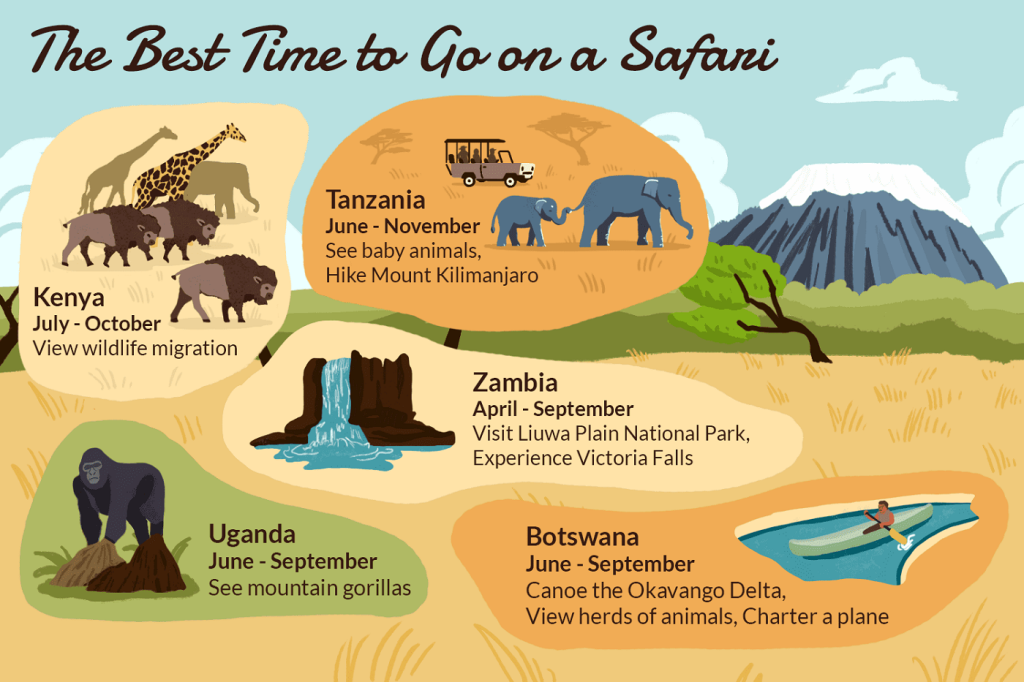
Safari experiences vary across Uganda regions. East Africa (Kenya, Tanzania, Uganda, Rwanda) is best for gorilla trekking, big game, and migrations June–October.
Southern Africa (Botswana, South Africa, Zambia, Zimbabwe) peaks May–October with optimal wildlife viewing. Knowing regional patterns helps plan timing, maximize sightings, and tailor safari activities.
Different regions in Africa have unique safari patterns.
| Region | Best Months | Key Safari Activities |
|---|---|---|
| East Africa (Kenya, Tanzania, Uganda, Rwanda) | June–October, Jan–Feb | Big game, gorilla & chimp trekking, birdwatching |
| Southern Africa (Botswana, South Africa, Zambia, Zimbabwe) | May–October | Big game drives, Okavango Delta, Victoria Falls tours |
| Migration Hotspots (Serengeti & Masai Mara) | June–October, Dec | Wildebeest migration & predator action |
| Uganda & Rwanda (Gorilla Trekking) | Jan–Feb, Jun–Sep | Gorilla & chimpanzee trekking |
How Weather Affects Wildlife Viewing
Weather plays a major role in wildlife spotting. Dry seasons concentrate animals near water, making sightings easier. Wet seasons bring lush landscapes and active birdlife but can make roads muddy and tracking wildlife harder. Knowing seasonal patterns ensures better planning and optimal safari experiences.
- Dry Season: Animals cluster around waterholes → easier spotting
- Wet Season: Green landscapes, fewer tourists, better birdwatching
- Rain: Can make roads muddy but also creates spectacular scenery
Expert advice: Pack light layers, waterproof gear, and binoculars for all seasons.
Cost Implications by Season
Safari costs vary by season. Peak dry months (June–August, December–January) are more expensive due to high demand and limited gorilla permits. Low or wet seasons (March–May, October–November) offer lower lodge rates and fewer crowds. Planning your safari by season helps balance budget, wildlife sightings, and comfort.
| Season | Safari Costs | Notes |
|---|---|---|
| Peak Dry (Jun–Aug) | High | Book early, especially for gorilla permits and accommodation |
| Low (Mar–May, Oct–Nov) | Moderate | Fewer tourists, lower lodge prices |
| Holiday (Dec–Jan) | High | Accommodation in high demand |
Expert Tips for Planning Your Safari Months
Plan your safari by aligning wildlife activity, weather, and park accessibility. Book gorilla and chimp trekking permits early, choose dry seasons for easier game drives, and combine multiple parks for a richer experience. Pack layered clothing, rain gear, and consult local guides to maximize your 2026 safari adventure.
- Combine multiple parks to maximize wildlife experiences
- Decide between budget, mid-range, or luxury safari
- Book gorilla trekking permits months in advance
- Travel light and carry layered clothing
- Include local culture visits for a more complete safari
FAQs – Uganda Safari Timing
Q: What is the best month for gorilla trekking?
Jan–Feb and Jun–Sep are ideal. Less rain and easier trekking.
Q: Which months are best for wildlife migrations?
June–October in Serengeti & Masai Mara.
Q: Can I go on safari during the wet season?
Yes, but some roads may be muddy. Parks like Bwindi still offer gorilla trekking.
Q: Is Africa safe for tourists year-round?
Yes, but always follow park guidelines and travel with licensed guides.
Conclusion – Planning Your Safari by Month
Planning your safari by month makes a huge difference. By aligning your trip with dry seasons, wildlife migrations, and park accessibility, you can enjoy:
- Optimal wildlife viewing
- Memorable gorilla and chimp encounters
- Less crowded parks
- Better photos and travel experiences
For 2026, follow this month-by-month guide and consult experienced Uganda safari guides to make your safari unforgettable.